

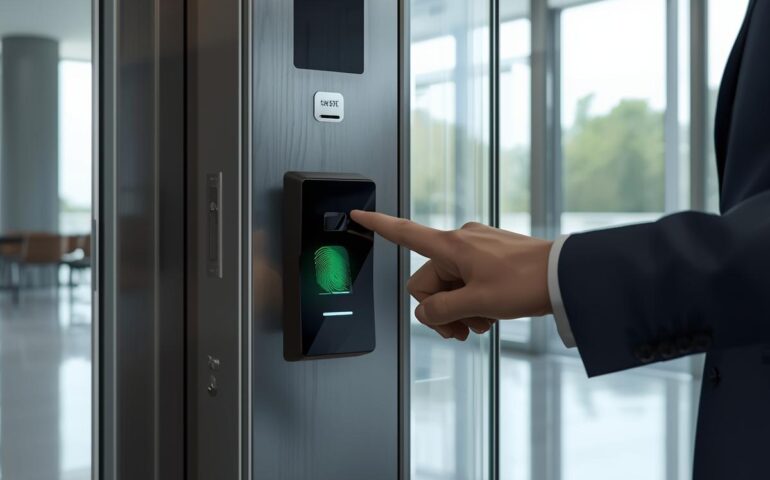
Security is one of those things people only worry about after something goes wrong. I’ve seen this again and again while working with workplaces, private properties, and restricted facilities. Theft, unauthorized entry, fake attendance, and identity misuse usually happen because traditional security methods fail. That’s where biometric access control systems completely change the game.
In this article, I’ll share my real-world experience with fingerprint attendance machines, biometric authentication, access control gates, and monitoring systems, and explain how these technologies improve workplace security, home security, and private property protection—without making things complicated for users.
A biometric access control system is a security setup that allows entry only after verifying a person’s biometric data, such as fingerprints or facial data. Unlike keys, cards, or passwords, biometric data cannot be easily stolen, copied, or shared.
In most real installations I’ve worked with, this system includes:
A fingerprint scanner or fingerprint reader system
An access control gate or door lock system
A fingerprint recognition keypad
A backend system for identity verification and data access control
This setup ensures that only authorized access is granted to employees, residents, or approved individuals.
Many businesses still rely on:
Physical keys
ID cards
Security guards
Manual attendance registers
The problem is simple. These methods are easy to bypass. ID cards can be shared. Keys can be copied. Guards can’t monitor every entry point 24/7.
From a physical security system perspective, these weaknesses directly increase the risk of:
Theft
Robbery
Vandalism
Unauthorized entry
This is why organizations are shifting toward biometric attendance systems and access control systems.
A fingerprint attendance machine does more than just mark attendance. In real environments, it becomes part of a larger entry management system.
Here’s how it helps:
Prevents buddy punching and fake attendance
Tracks employee attendance records accurately
Links attendance data with workforce management systems
Controls entry using biometric authentication
Because fingerprints are unique, employee identification becomes reliable and tamper-proof.
An access control gate acts as the first line of defense. Without biometric verification, the gate simply won’t open.
In restricted areas, this setup is crucial for:
Restricted area access
Protecting sensitive assets
Preventing internal security breaches
Even if someone knows a password or steals an ID card, they still can’t pass without identity verification through fingerprints.
Modern systems don’t just allow or deny entry. They also record everything.
Most installations include:
Activity monitoring systems
Entry and exit records
Access logs
A digital log book system
These logs are extremely useful in case of:
Security incidents
Internal investigations
System audits
If something goes wrong, you always have data to review.
One overlooked benefit of biometric systems is identity theft prevention.
Unlike passwords or PINs:
Fingerprints cannot be guessed
Biometric data is harder to replicate
Access is tied directly to the individual
This protects personal information, credit information, and banking information that might otherwise be exposed through weak security practices.
Today’s security challenges are not only physical. Digital threats matter too.
A good system combines:
Physical + digital security integration
Password management
Online account security
Credential protection
For example, attendance and access data stored digitally must also follow data breach prevention and computer security best practices.
In high-security environments, standard scanners are sometimes not enough. That’s where high-quality fingerprint scanners come in.
Advanced scanners can:
Read fingerprints from longer distances
Work in low-light or dusty environments
Reduce false rejections
Improve authentication speed
These are commonly used in security houses, industrial facilities, and restricted places.
From a management point of view, biometric systems improve:
Time and attendance systems
Payroll accuracy
Employee accountability
Workforce transparency
Managers no longer rely on manual records. Everything is automated, accurate, and secure.
From my experience, investing in biometric access control and fingerprint attendance systems is no longer optional—it’s necessary. Whether it’s workplace security, home security, or private property protection, these systems provide peace of mind, accuracy, and long-term security.
They reduce human error, prevent unauthorized access, protect sensitive data, and create a safer environment for everyone.
The main benefit is accurate attendance tracking combined with strong security through biometric authentication.
Yes, when properly configured, they offer strong biometric data security and identity theft prevention.
In most cases, yes. They eliminate the risk of lost, stolen, or shared ID cards.
Absolutely. They scale well and improve both attendance management and security.
High-end fingerprint reader systems work well even in challenging environments with dust or low lighting.